

Helios 44-2 58mm f/2: How to Choose, Buy and Use One
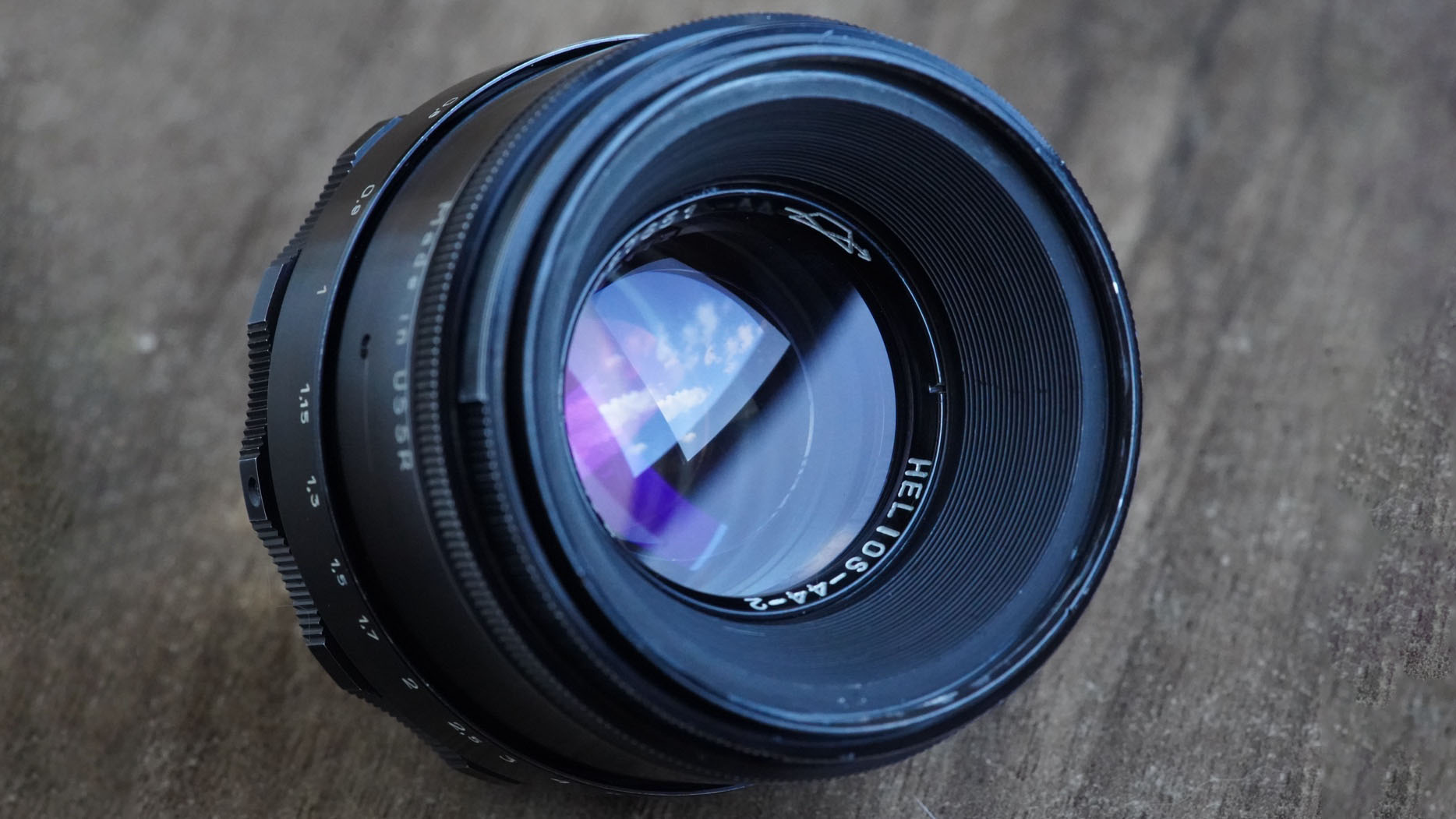
What is the best Helios 44-2? The best lens is the one you have with you when you want to take a picture. I slightly borrowed that from the famous quote about cameras. But seriously, I don’t see any huge difference between properly working Helios 44-2 lenses from different factories or years of production. Take two clean, properly assembled Helios 44-2 lenses – say, a KMZ and a Valdai – put them on the same camera, shoot the same scene wide open, and show me the photographs. Could I reliably tell you which photograph was taken with which lens? No. So I wouldn’t start by hunting for a magical factory or production year. I would start with the condition of the actual lens – and whether it is pleasant to use on your camera. But there are a few things I consider much more important than the factory name or year of production.
A Lens Shouldn’t Be Unpleasant to Use
Let’s start with something unexpected: smell.
Old Soviet lenses often smell pretty bad. A lens can look almost new, but bring the camera up to your face and suddenly everything becomes clear.
And your camera does spend quite a lot of time close to your nose when you look through the viewfinder. Take a few pictures with a smelly old lens and you may find that you don’t care about its beautiful bokeh anymore.
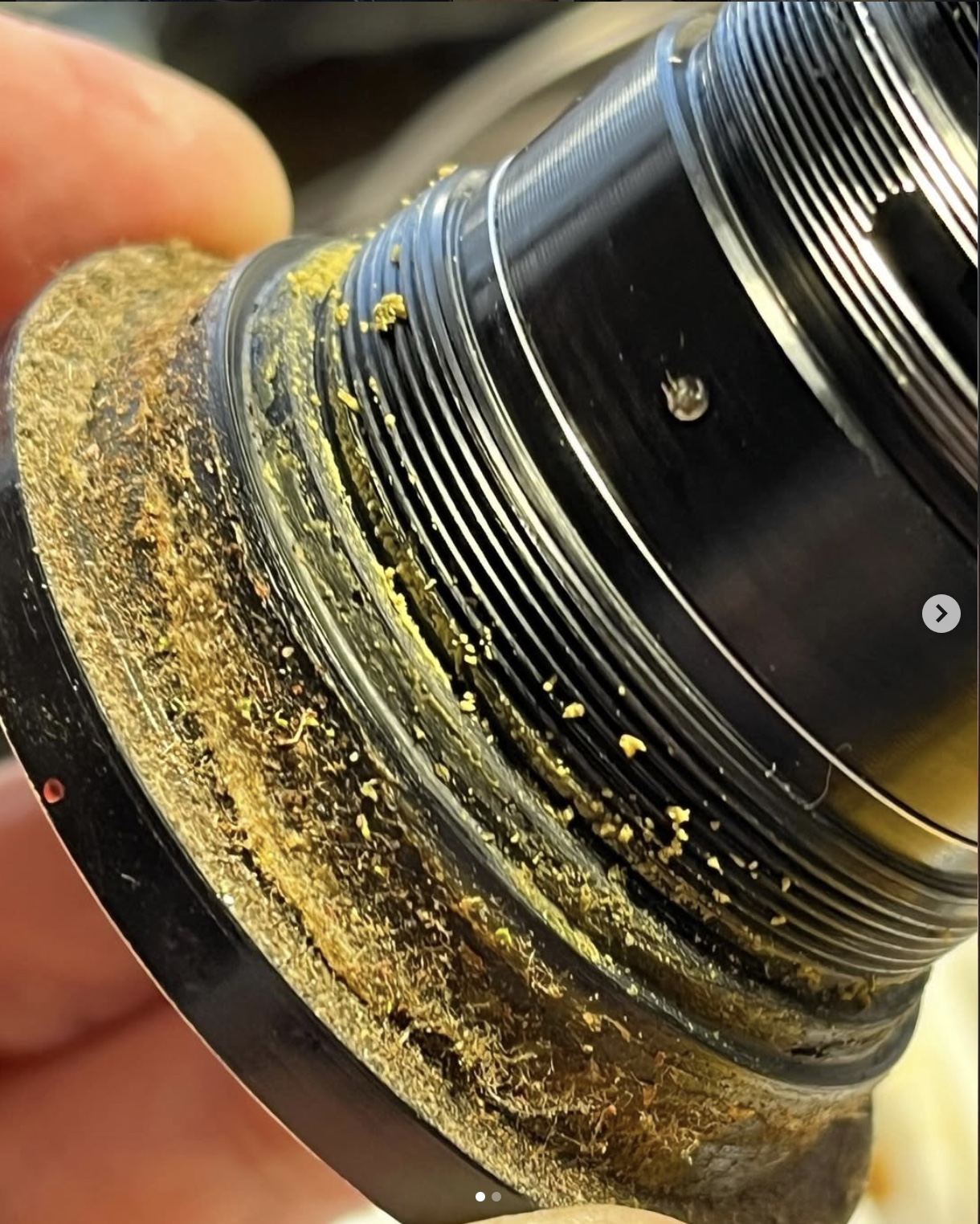
The smell usually comes from the old lubricant, and there can be quite a lot of it inside Soviet lenses.
Why they used so much of it, I don’t know for certain. I can only guess that it may have helped compensate for rather generous manufacturing tolerances and the lack of careful individual fitting during assembly. But that’s only my guess.
After several decades, that lubricant changes, gets contaminated and can smell rather unpleasant.
The modern lubricants I use when restoring lenses have practically no smell at all.
Photography depends quite a lot on emotions. So if you’re holding something dirty, stiff and slightly smelly, your emotions will probably be appropriate too.
Look Through the Glass, Not Just at It
Another thing buyers of vintage lenses often worry about too much is cleaning marks.
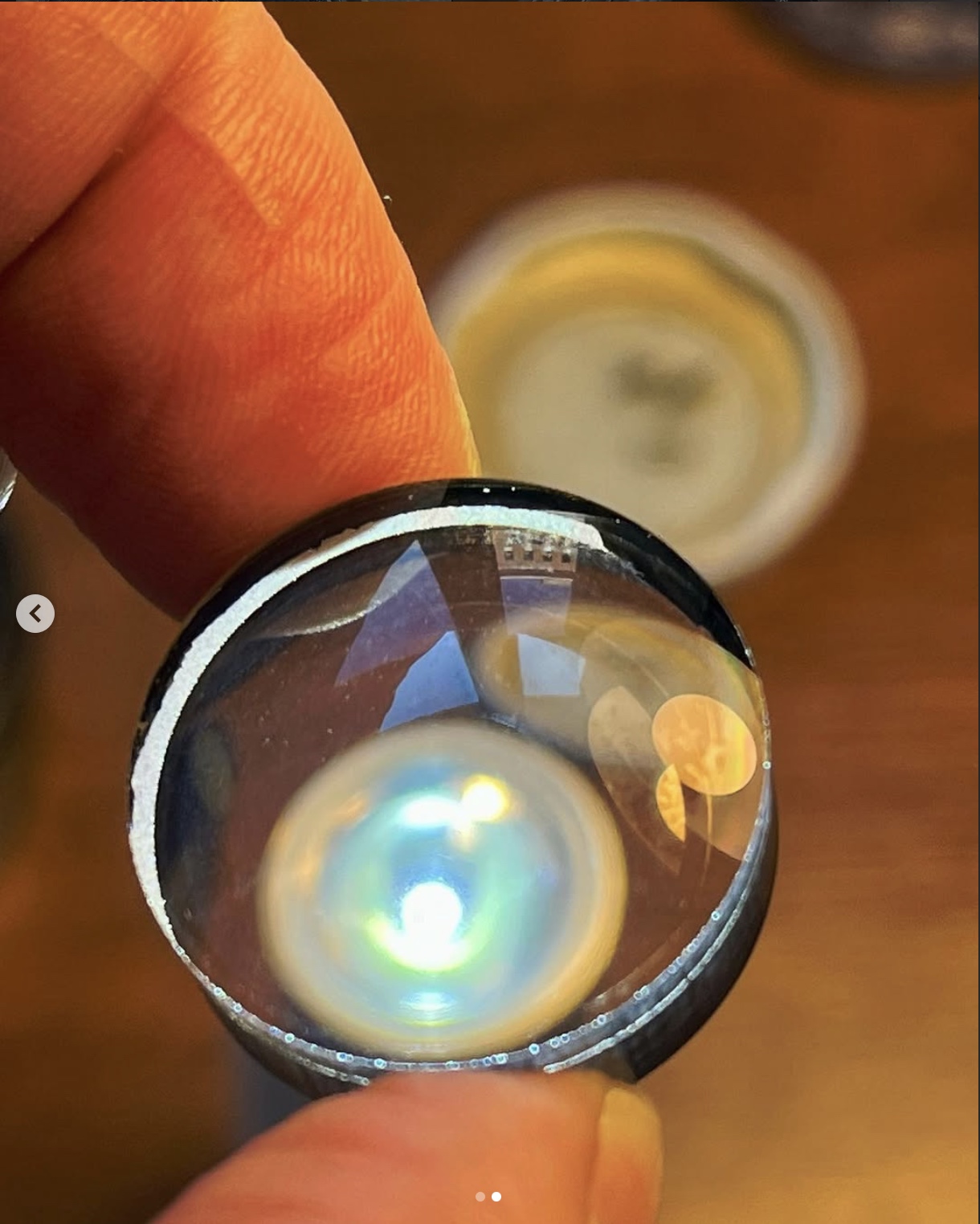
A few small cleaning marks usually have much less effect on a photograph than people expect. Small scratches can matter more for video in some circumstances, especially when they are on the rear element, but for still photography they are far from the worst problem an old Helios can have.
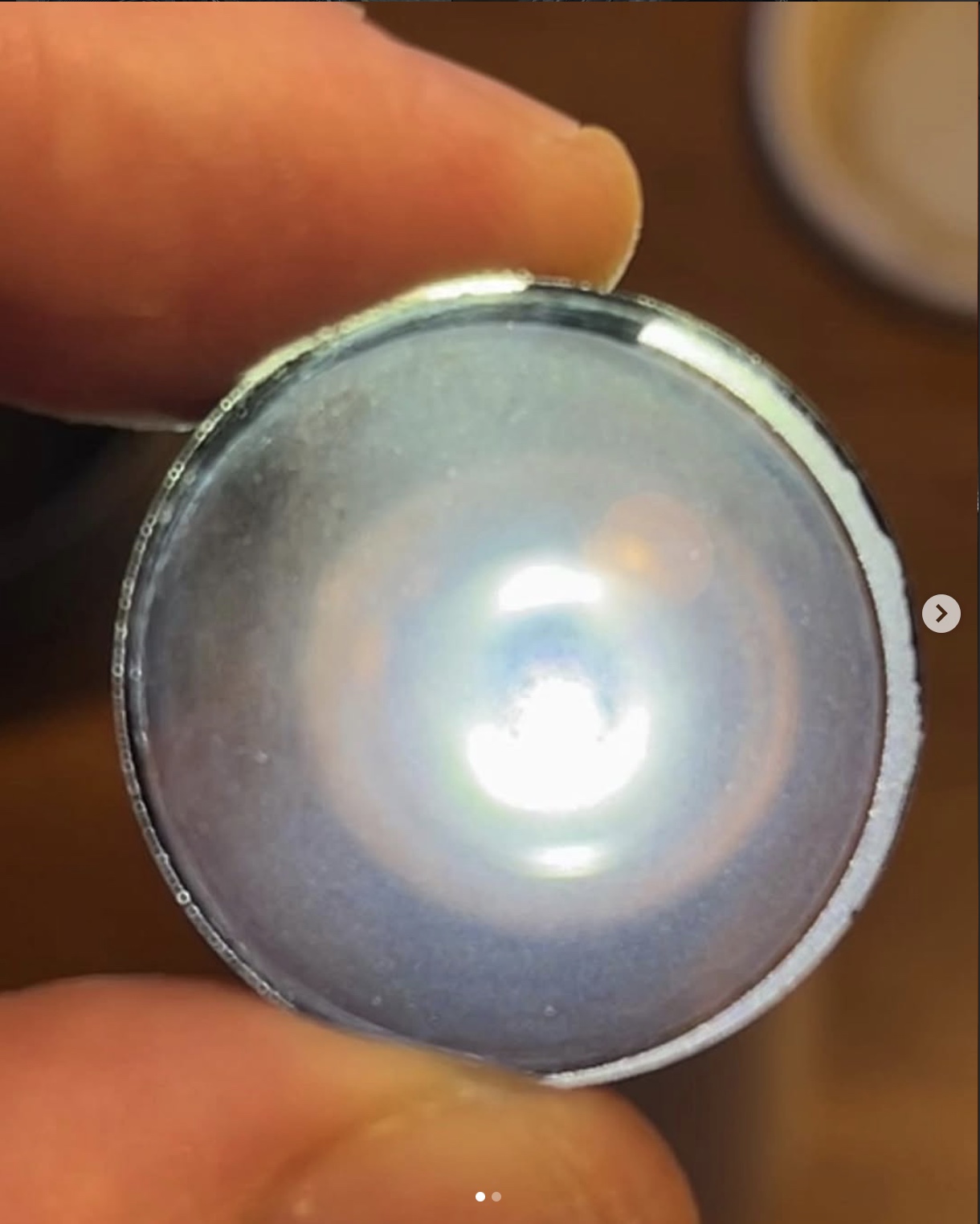
Haze is much worse.
Over the decades, contamination and vapors from old lubricant can leave a film on internal optical surfaces. The lens may still look perfectly respectable from the outside, while its contrast has dropped dramatically.
So a beautiful barrel and a clean-looking front element don’t necessarily mean that you have a good lens in your hands.
Sometimes it is much more useful to look through the glass than at it.
The Focus Ring Should Just Turn
The focus ring should turn smoothly and evenly.
Sometimes you have only a fraction of a second to focus and take the picture. Fighting a stiff helicoid at that moment is the last thing you want.
What Does a Fully Restored Helios 44-2 Actually Mean?
It is probably worth explaining what I mean when I say that I restore a Helios. I take the lens almost completely apart. First I separate the optical block from the helicoid. Sometimes I can do this by hand, but usually I need special tools. I remove the front and rear optical elements from the lens block, remove the aperture control and limiter rings, and then remove the diaphragm completely. The external decorative rings come off the focusing assembly, and the helicoid itself is completely disassembled. Then the mechanical parts – except the decorative ones – are cleaned of old lubricant and contamination. After that, they are washed again to remove the remains of the cleaning solvents. I clean every optical element separately, on both sides, using several different cleaning agents. Every diaphragm blade is cleaned individually. Then the whole process goes in reverse. The diaphragm is rebuilt inside the already cleaned lens body. New lubricant is applied where necessary, and the aperture controls go back in. The glass is reinstalled. The helicoid is assembled separately with fresh lubricant. During assembly I deal with play in the mechanism and reduce it as much as reasonably possible. Finally, the optical block and helicoid are joined again, and, if necessary, I correct the thickness of the adjustment shims between them. That’s the general procedure, of course. It doesn’t include the additional work that almost every old lens needs, or the problems during disassembly and assembly that seem to be waiting inside almost every lens.Why Doesn’t My Helios 44-2 Swirl – and How Do I Get Swirly Bokeh?
You don’t need to hunt for a special Helios 44-2 that “swirls more.” If we’re talking about standard Helios 44-2 lenses, the effect depends much more on how you shoot than on which factory made the lens. Start by opening the lens to f/2. Then try this.Keep the Subject About 1–3 Meters Away
That’s a useful practical range to start experimenting.Put the Background Much Farther Behind the Subject
As a simple starting point, if your subject is about one meter from the camera, try leaving roughly five meters between the subject and background. If the subject is around two meters away, try increasing that background distance to something around ten meters. Don’t treat this as an optical formula. It isn’t. It’s just a simple place to start.Choose a Background That Has Something to Swirl
Small leaves with sunlight coming through the gaps will swirl much more easily than a plain wall. But that doesn’t mean a wall can never work. If that wall has lots of windows reflecting sunlight – or illuminated windows at night – then with the right conditions you may be able to make that swirl too. Basically, look for a background that has something to swirl.Sensor Size Matters Too
The swirl becomes stronger toward the edges of the image, and APS-C simply crops much of those edges away. So you can certainly get swirl on APS-C, but it is noticeably harder than on full frame.
Does the Aperture Change the Bokeh?
A standard Helios 44-2 has an eight-blade diaphragm.
But the famous swirl is normally shot wide open. At f/2, the aperture opening is round, so the number of blades isn’t what creates that classic wide-open swirl.
Once you start stopping the lens down, things change.
The standard eight blades produce characteristic octagonal highlights in the bokeh.
But the diaphragm can be modified.
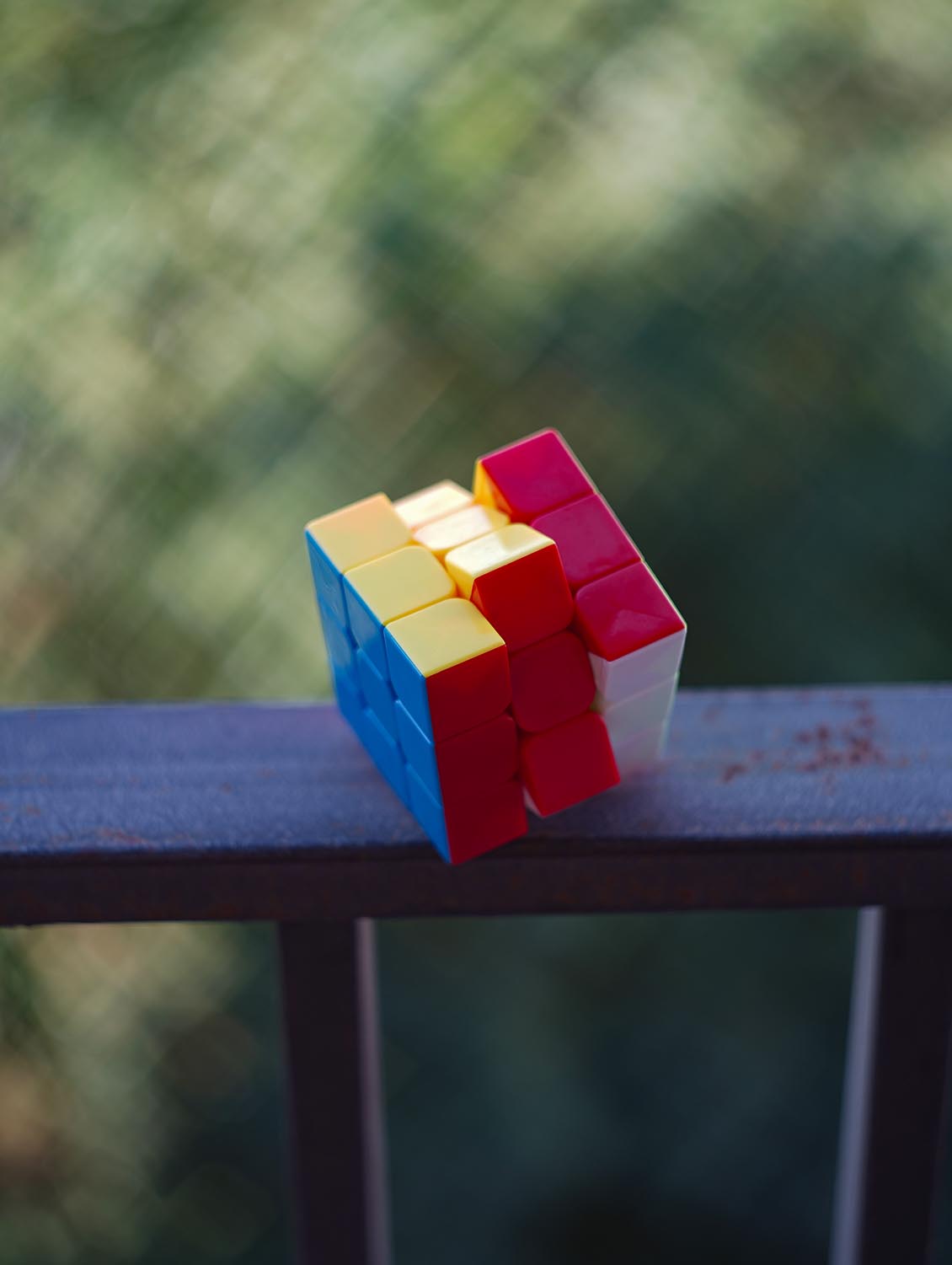
A square aperture creates a completely different pattern. With the right background, the bokeh can start to look almost like tartan fabric.
An anamorphic-style aperture produces elongated bokeh shapes that look surprisingly similar to those created by real anamorphic lenses.

Can I Use a Helios 44-2 on My Camera?
If you have a modern mirrorless camera, usually yes, and usually quite easily.
The Helios 44-2 uses the M42 mount. Sony E, Canon RF, Nikon Z, Fujifilm X and many other mirrorless systems leave enough physical space to use the lens with a simple mechanical adapter.
With mirrorless cameras, that’s usually all there is to it.
Problems start when you want to use a Helios 44-2 on an SLR.
And, as it turns out, quite a few people still do. New SLRs may have largely disappeared from the market, but many people buying vintage lenses also want to shoot film.
That’s where Canon and Nikon usually enter the conversation.
Canon EF
It would seem that Canon EF shouldn’t be a problem: M42 has a flange focal distance of about 45.46 mm, while Canon EF is 44.00 mm. Put on an adapter and shoot.
But no.
In practice, adapters come in different thicknesses, and the result isn’t always as exact as those numbers suggest. When I prepare a Helios for Canon EF, I may need to correct the adjustment shims so that infinity is actually where it should be.
Nikon F
With Nikon F, things are much more complicated. The Nikon F flange focal distance is 46.5 mm – about one millimeter longer than M42. And that millimeter ruins the easy solution. With a standard glassless adapter, a normal Helios 44-2 will focus on Nikon F only to roughly two meters, not infinity. To make it work properly, I have to change the mechanics of the lens itself – both the optical block and the helicoid. After the conversion, the Helios works normally on Nikon F, including infinity.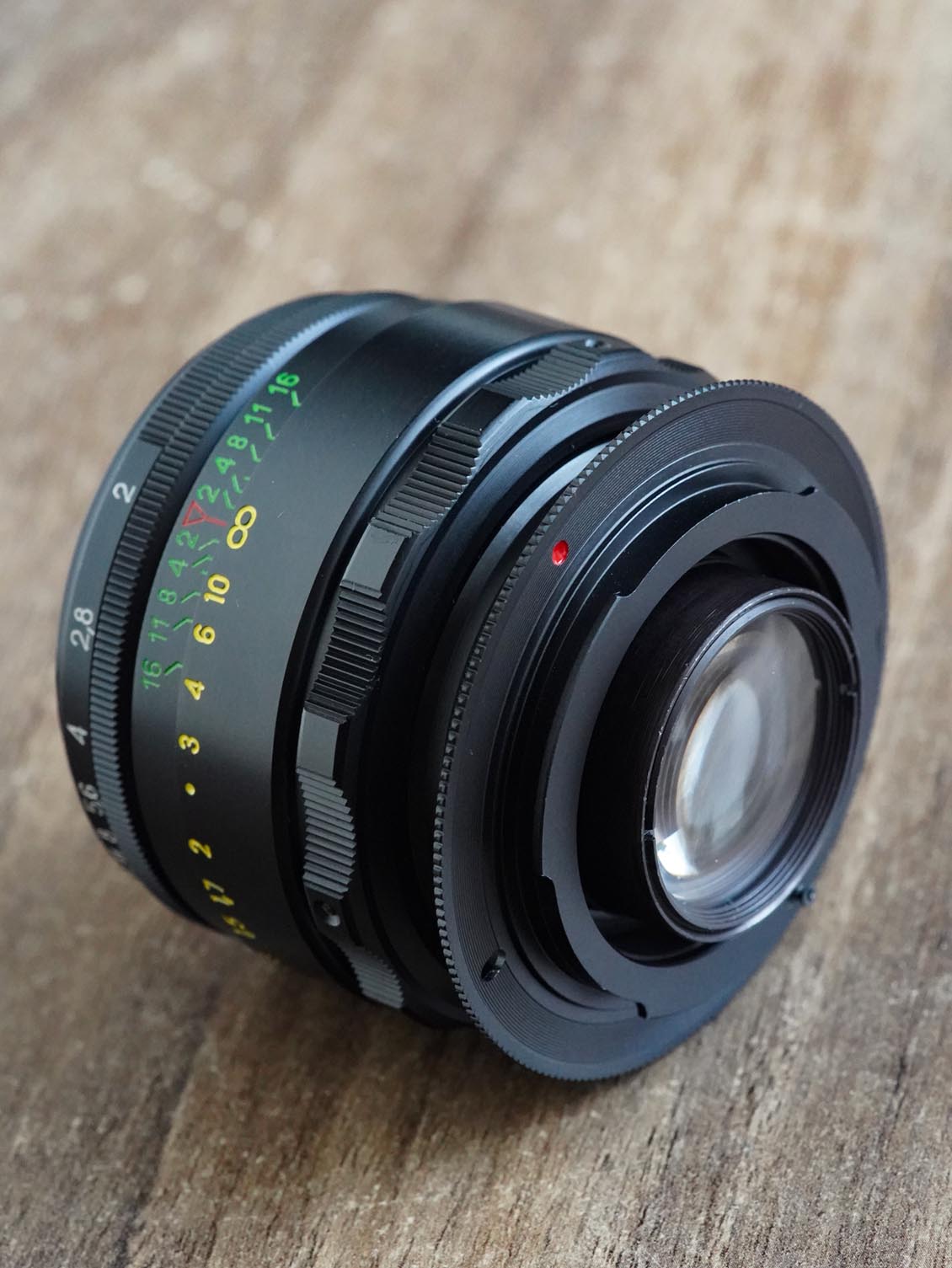
Rangefinder cameras are another possibility. You can put a Helios 44-2
on one and focus using the distance scale on the lens.
But that’s getting into fairly exotic territory.
Can a Helios 44-2 Swirl Even More?
Yes.
I’ve spent a lot of time experimenting with the Helios design, and eventually developed a modification that makes the bokeh swirl much more strongly.
But there was one thing I wanted to keep: a sharp center.
Helios 44-2 Ultra Swirl Edition
With the Ultra Swirl modification, the center remains very sharp – sometimes I even think it looks sharper than before the modification – while the bokeh around it begins to swirl much more aggressively. More importantly, the effect starts appearing in situations where an ordinary Helios 44-2 would barely try to swirl at all. And yes, that photograph was really shot at f/4. With a standard Helios, I normally want the aperture fully open when I’m trying to get a strong swirl. Ultra Swirl gives me considerably more freedom.
What Is the Helios 44-2 Petzval Mod?
This is the modification I call Magic.
On the internet, this type of Helios modification is often called a Petzval mod.
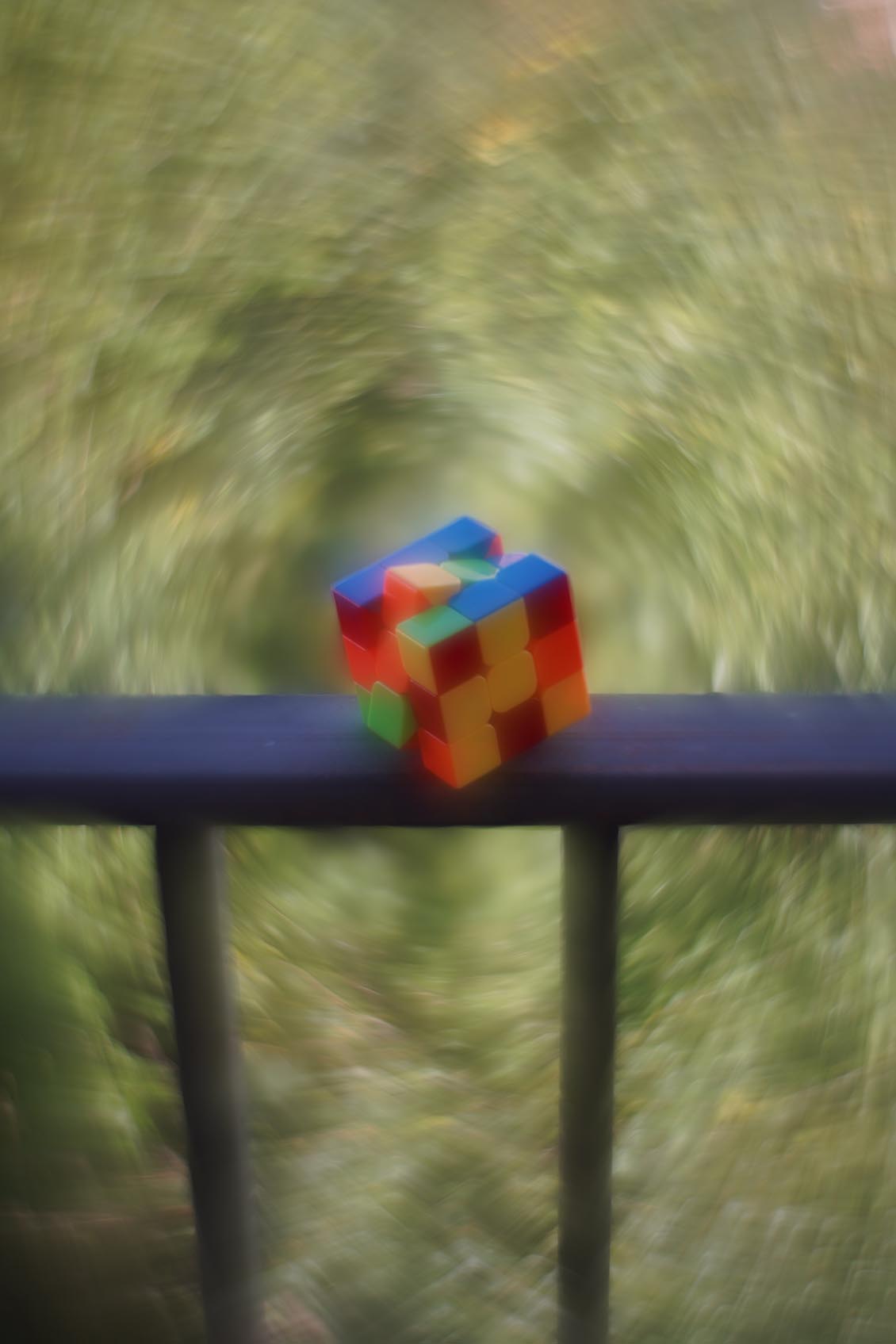
The name Petzval Mod is commonly used for a Helios modification in which the optical configuration is changed, usually by reversing the front element.
The result is extremely strong swirl, but there is a price for it.
The center becomes soft too. Sharpness drops dramatically and the whole image takes on a strange, heavily aberrated character.
Sounds terrible?
In a way, yes.
But that’s exactly the fun of it.
Magic is also available as an optical design option in my Helios 44-2 Configurator.
Can You Change the Flare Too?
Yes.
You can move in one direction and try to suppress internal reflections, increase contrast and make the lens more controlled.
Or you can go in exactly the opposite direction.
You can make a Helios catch light, lose contrast and produce strong flare and internal reflections.
How exactly I do that, I think I’ll keep to myself.
There should still be a little mystery left in the workshop.